From a sales call to a 14-day trial merchants start alone
Self-onboarding for the Depict Shopify app
Depict's Shopify app brings merchandising, search and recommendations to a store. This is the story of how it went from a product that needed a sales call to one a merchant installs, tries on their own store for 14 days and takes live alone.
What the recordings showed
With pricing in place, I watched new merchants in PostHog: session recordings and a funnel from install to the first live collection.
The numbers were blunt. In one count, 63 merchants had uninstalled within their first hour, most of them after about three and a half minutes. The loading screen got a median of 19 seconds of attention. A merchant decided in about four minutes, and those minutes went to a slideshow and a checklist.
So the first goal was not selling. It was getting a merchant to try the product before they left.
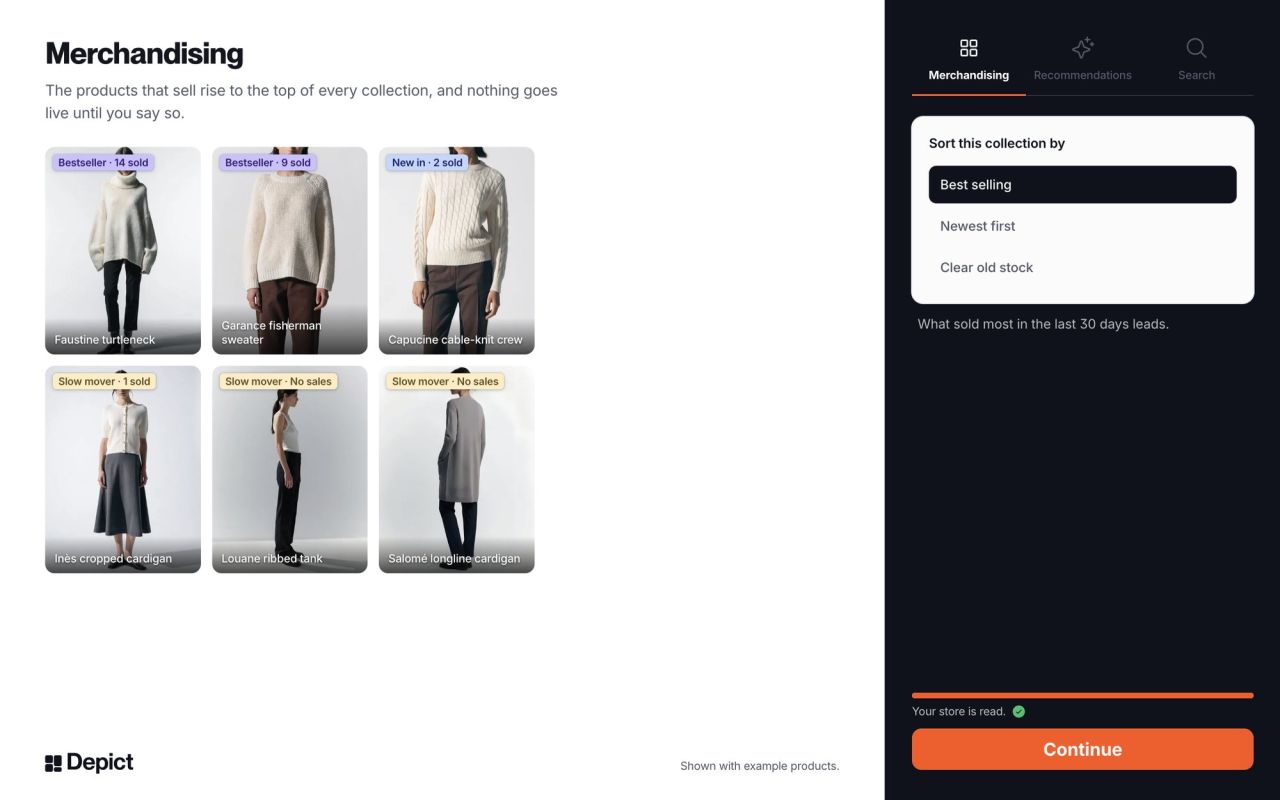
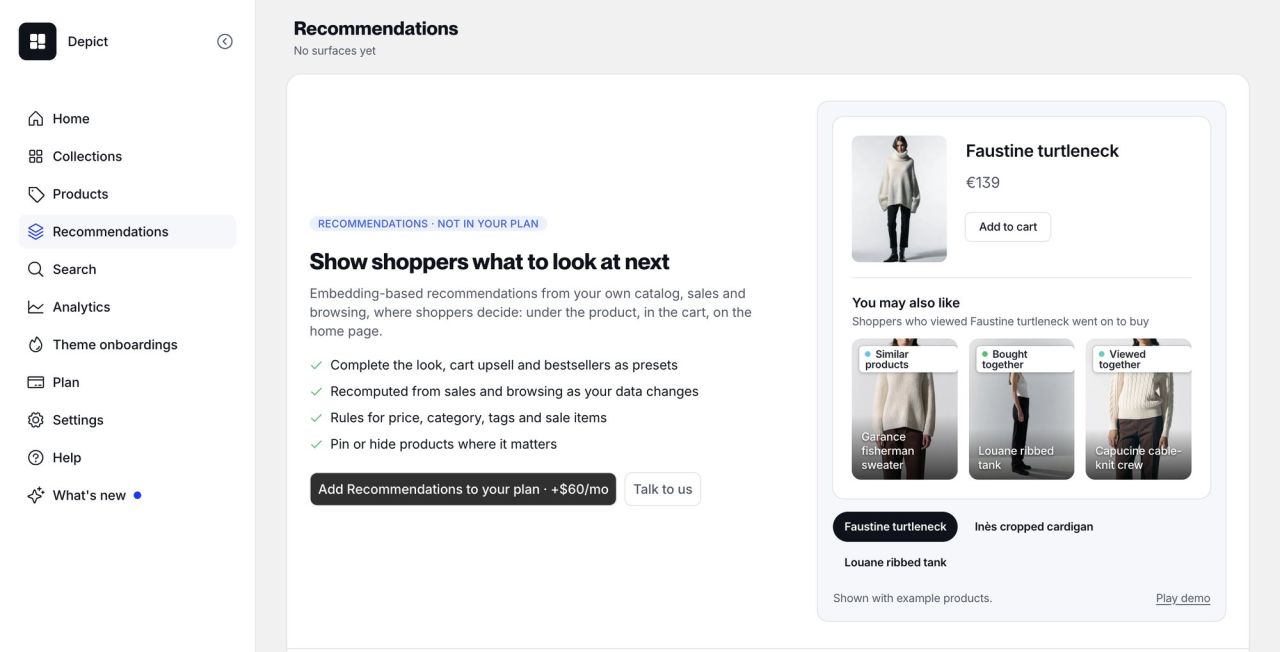
Second goal: converting
More merchants now tried Depict. Fewer than we hoped went on to pay. The recordings and interviews gave the same reason: a demo on example products is not proof. Merchants wanted to see it on their own store, with their own products, before paying.
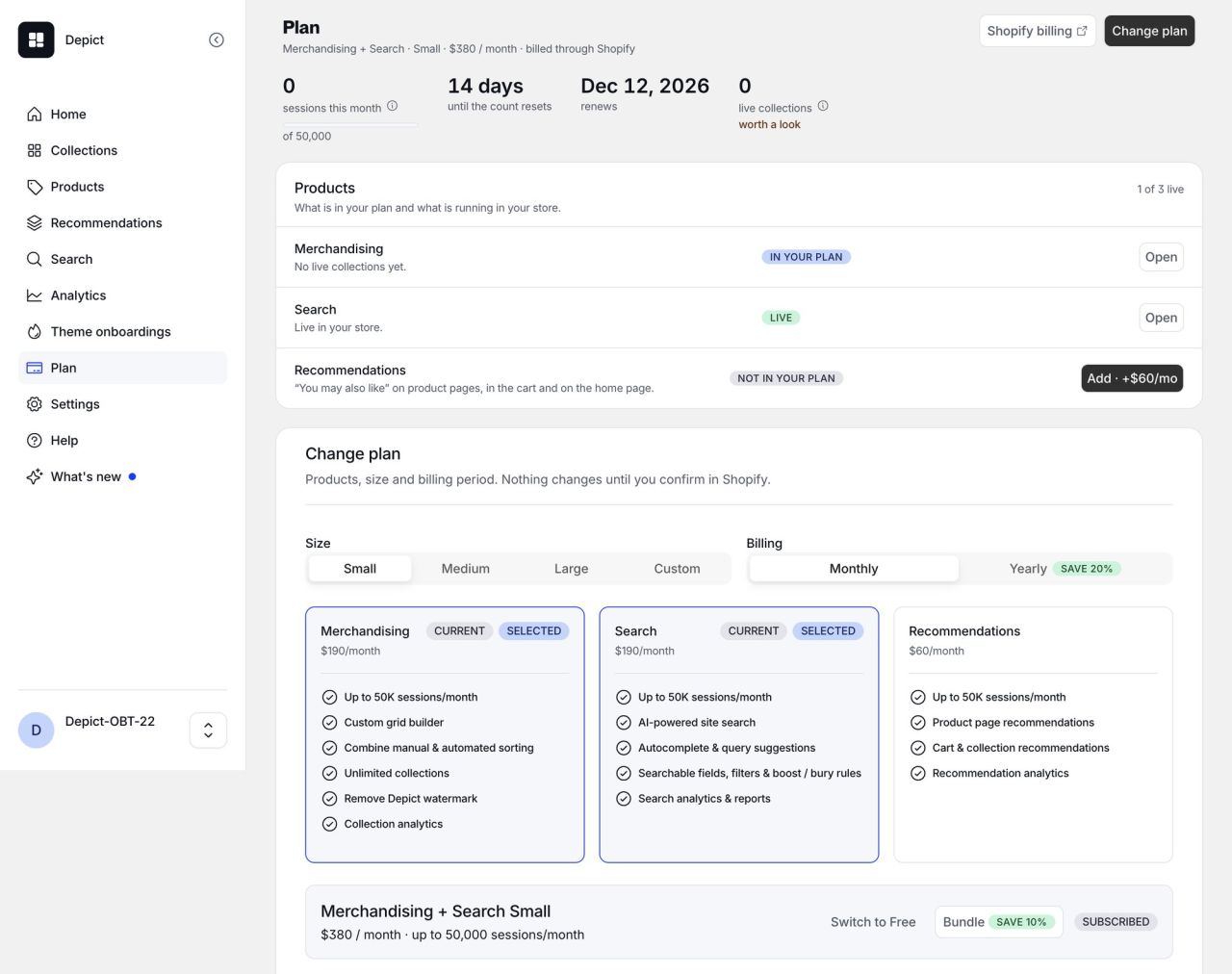
So we stopped asking for the decision up front and moved to a 14-day trial. Setting up is free. The 14 days start when the merchant presses Go live, not before, so nobody loses trial days to setup.
One solution for new and existing merchants
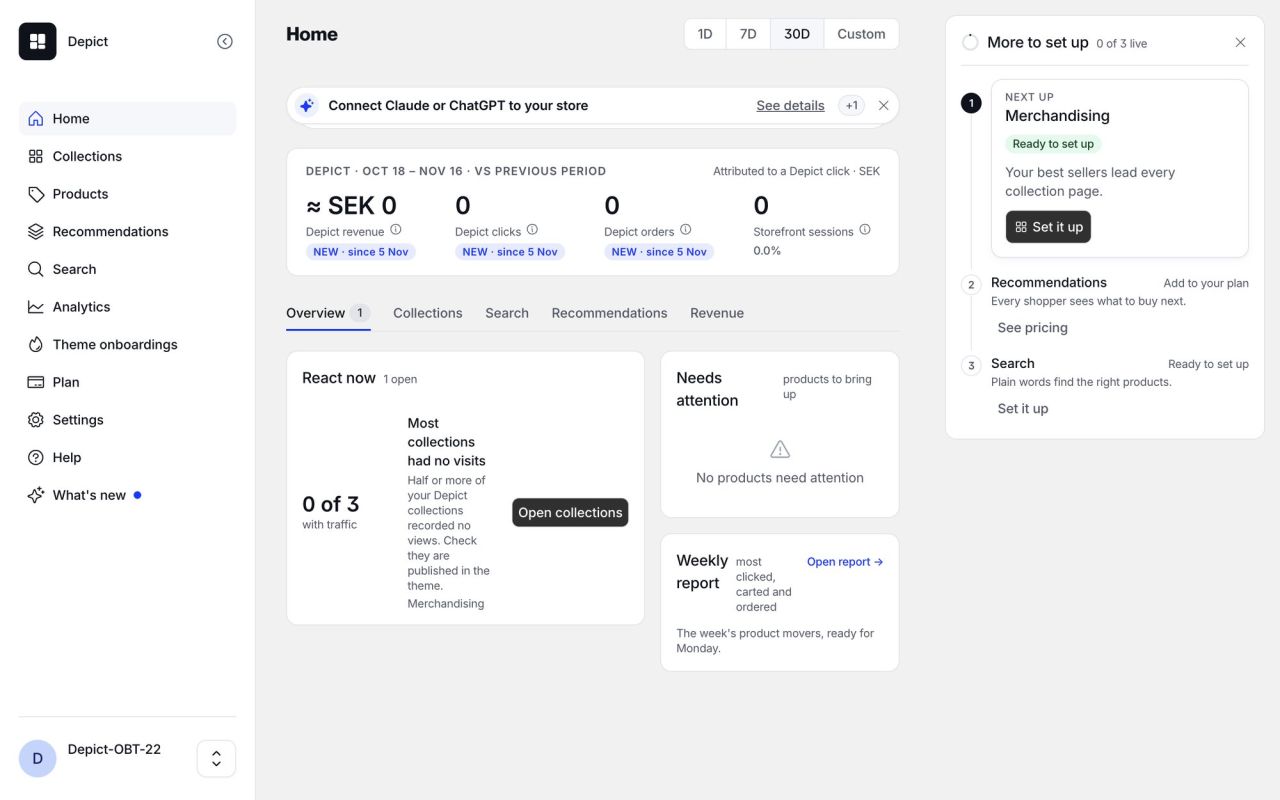
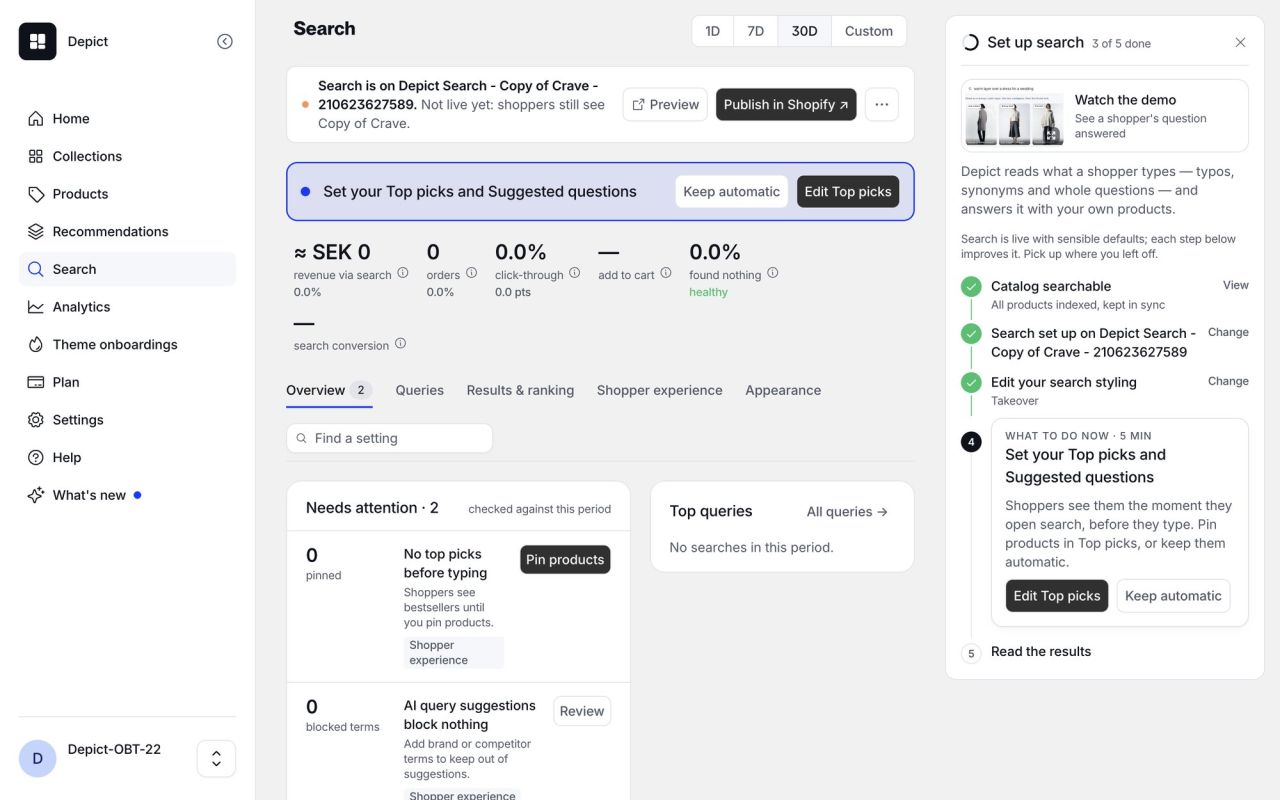
New installs were only half of the audience. Existing merchants had used Depict for merchandising for a long time and had never seen Search or Recommendations. They did not need a welcome, and a guide that restarted them from step one would have been in their way.
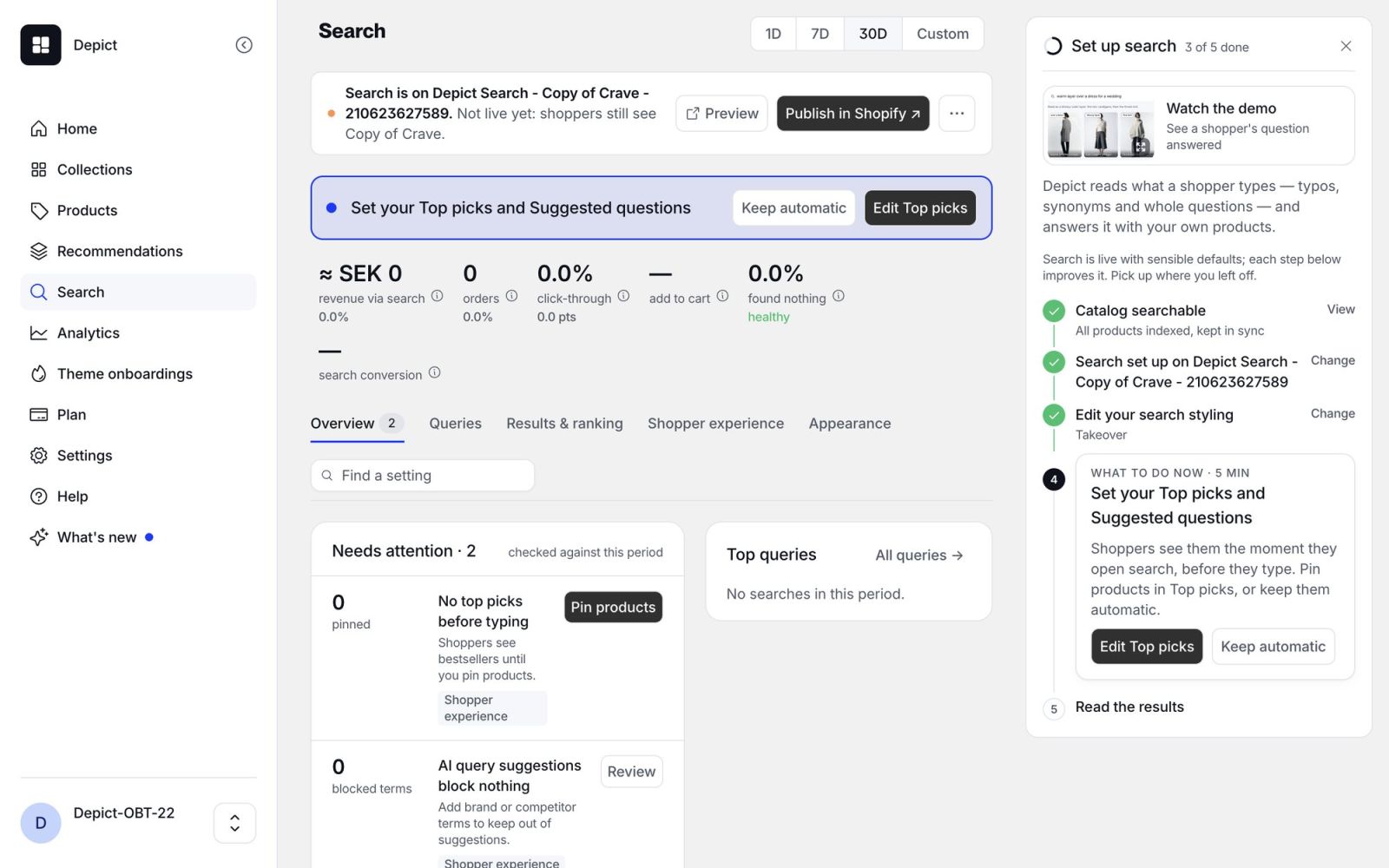
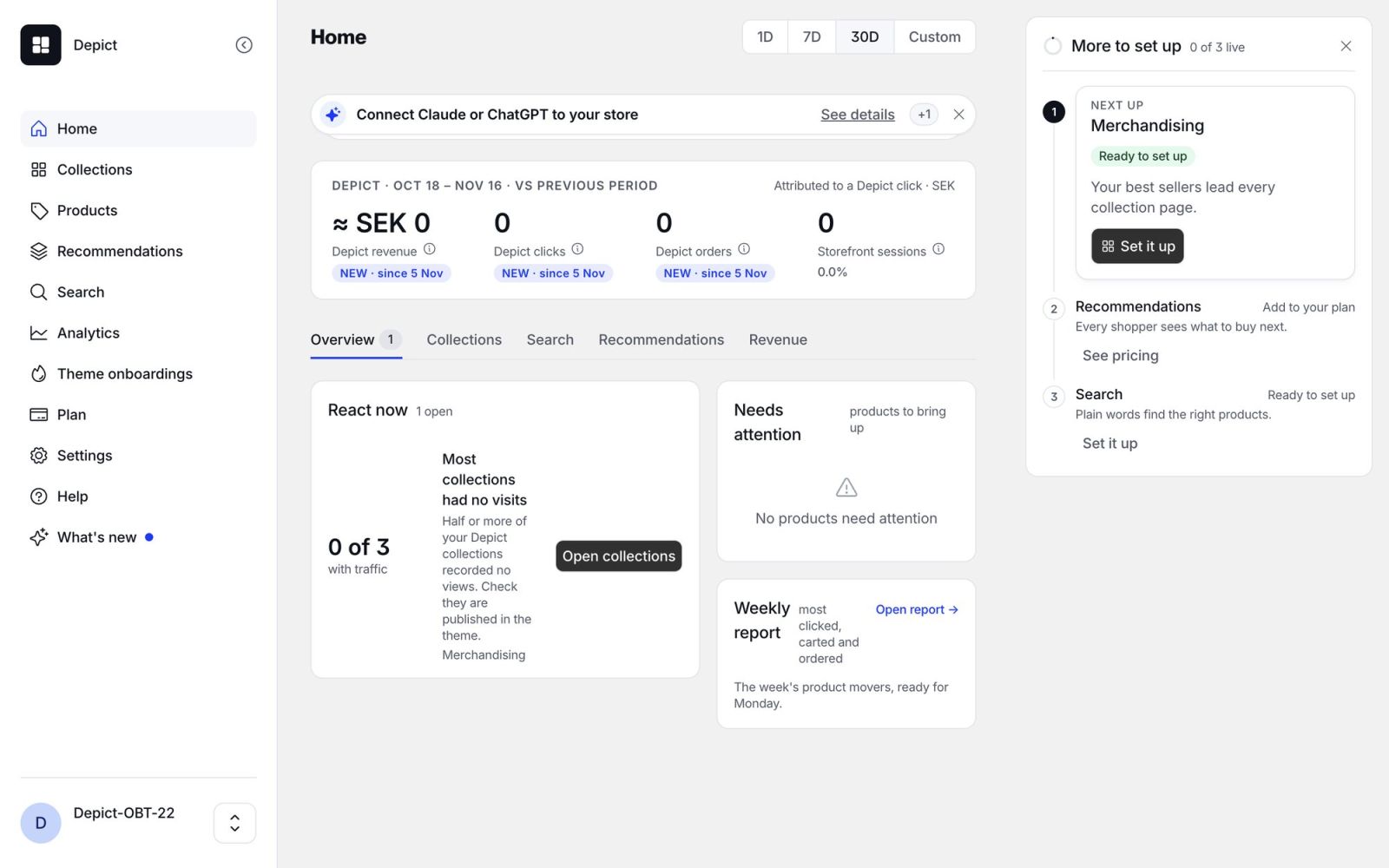
The challenge was to fit both into one solution instead of building two. The same guides and the same trial serve everyone: a store that is already running skips the steps it has done, the guides stay closed until a merchant opens them, and a new product starts its own 14 free days when it goes live.
How we got there
Self-onboarding is hard to test. Sit next to a merchant and they behave differently: they are patient, they ask, they forgive. The situation biases them. So no single method was enough, and we combined several:
- Heuristic evaluation against Nielsen's 10 usability heuristics, screen by screen
- Interviews with merchants and with the people who used to onboard them by hand
- Design reviews on clickable prototypes before any code
- Tests with real merchants, each change switched on for a few stores first
- Recordings and funnels in PostHog to see what merchants did when nobody was watching
Progress came in small steps, and some of it meant cutting work we liked: the welcome slideshow, the first setup checklist, and every pop-up that opened by itself.